

How To Draw A Stepwise Mechanism
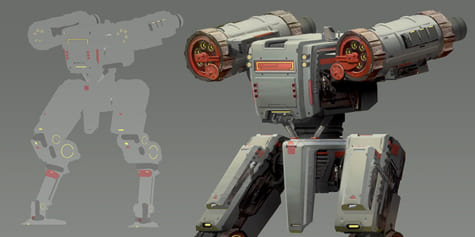
Surround artist Scott Zenteno shares how they use photo collages as a base to efficiently pattern a mecha! Learn how you can create outstanding and conceivable artwork by taking a deeper look into concepts such as the center of residuum and lighting.
INTRO
In this tutorial, I'll be showcasing my mecha pattern process that focuses on getting to a polished stage relatively rapidly. By manipulating photos into shapes, a blueprint tin quickly reach a level of detail and believability comparable to a 3d model.
PULLING OUT PIECES
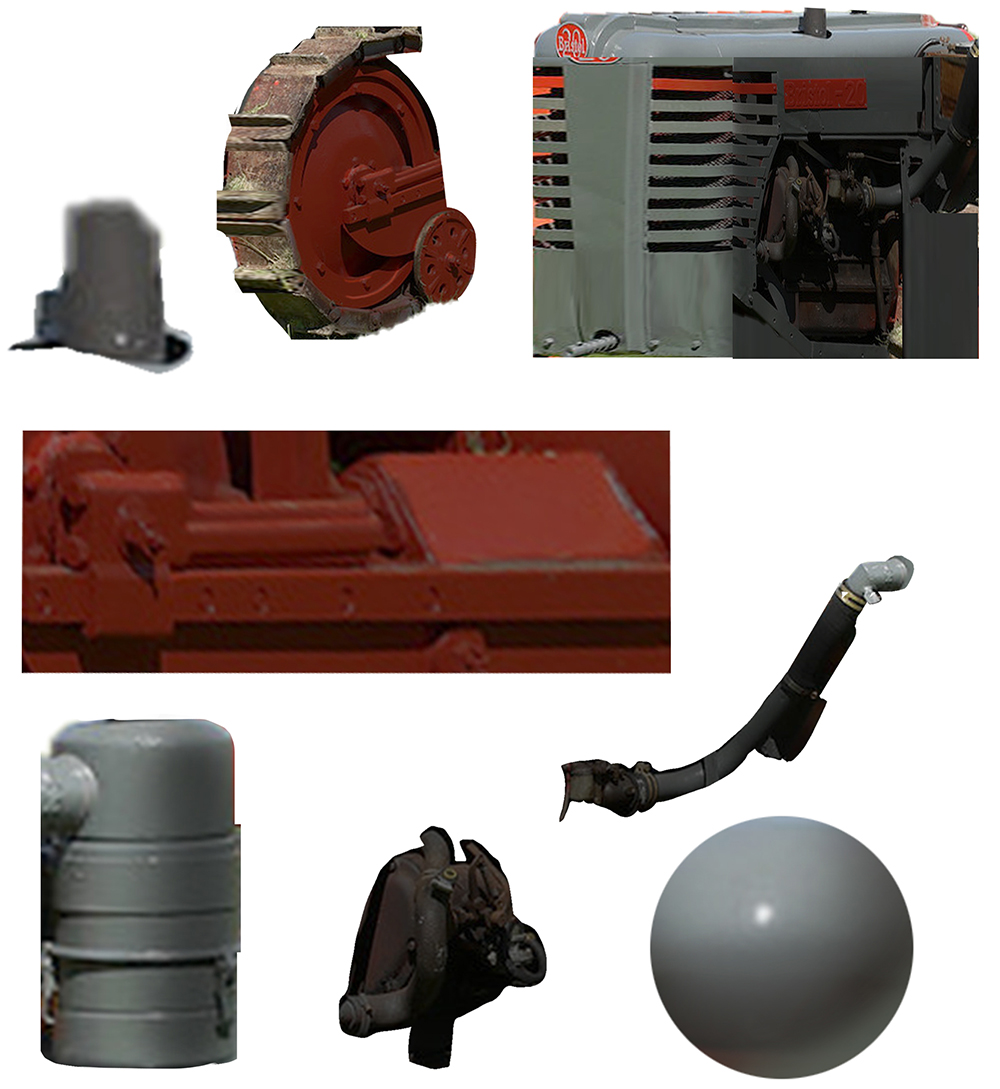
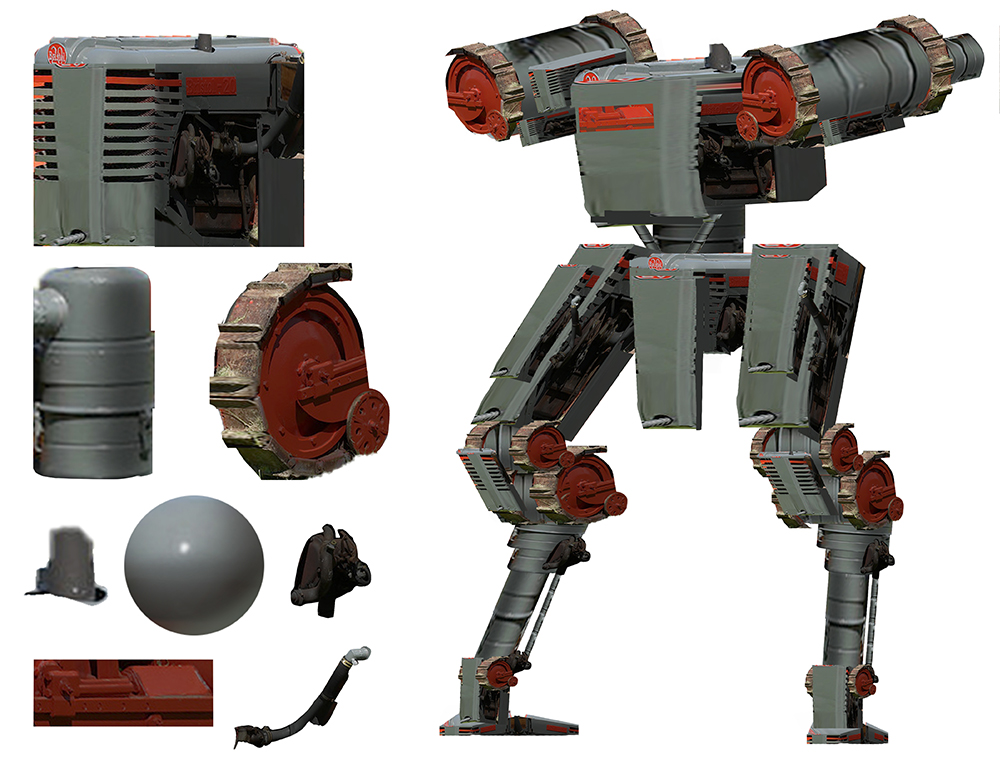
I start by taking photos and searching for images, particularly of objects that take distinct light and shadow sides. After that, I select private parts of the images that have solid forms. Breaking the object apart helps me understand how an object is put together. For example, hardware will unremarkably have an external surface that protects the performance bits, with a chassis underneath it that contains the parts themselves.
CREATING PRIMITIVES
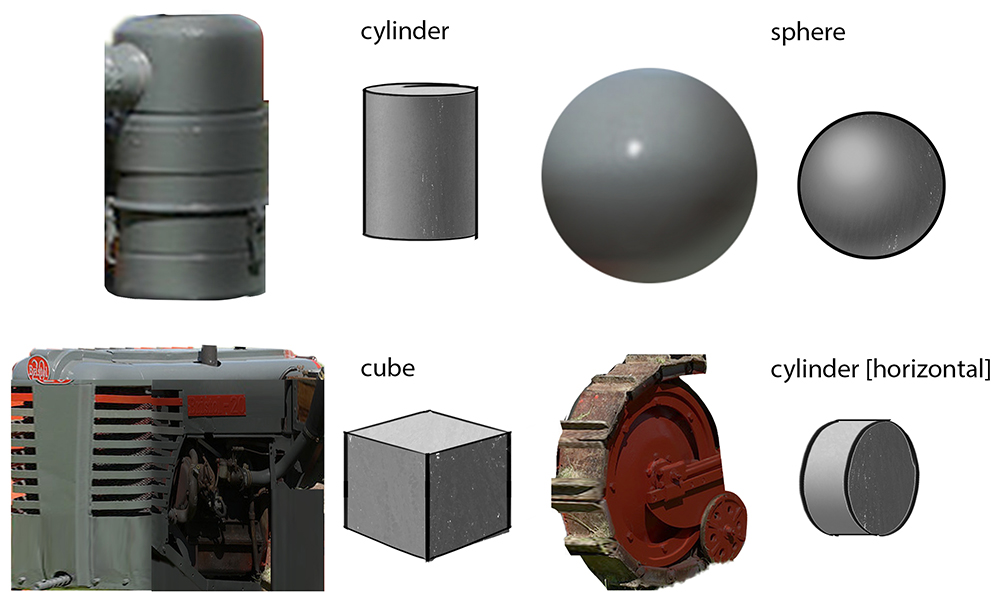
I so manipulate the low-cal and shadow sides to create basic 3d primitives (cube, cylinder, sphere.) Any object can be broken down into these cadre forms, exist it mecha, human, car; y'all name it! These primitives will be the building blocks of our bipedal mecha. This step can exist simple or complex depending on the photo you lot apply, which is why it'southward of import to take photos with potent light and shadow.
EXPERIMENTING WITH YOUR SHAPES
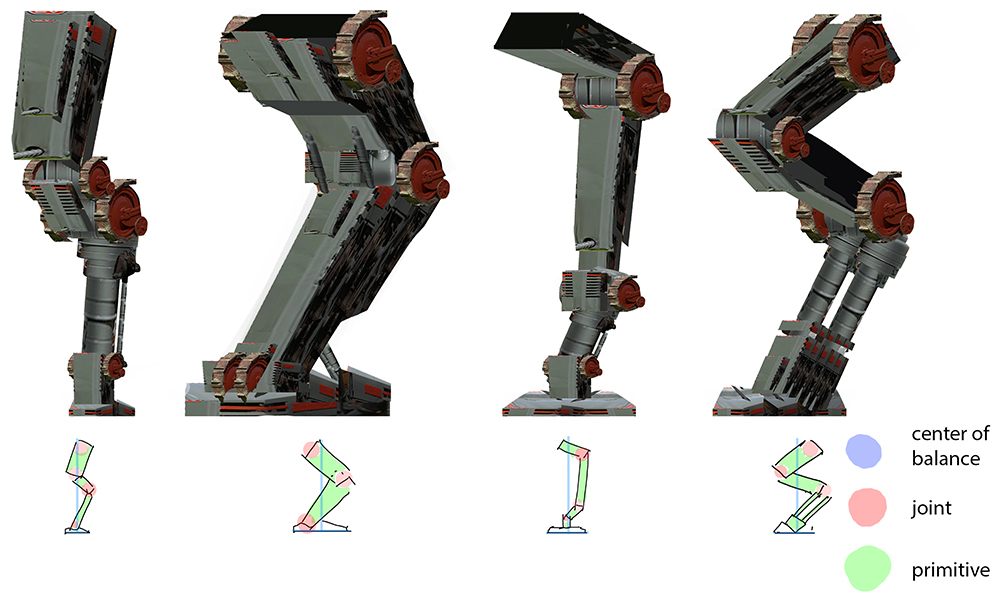
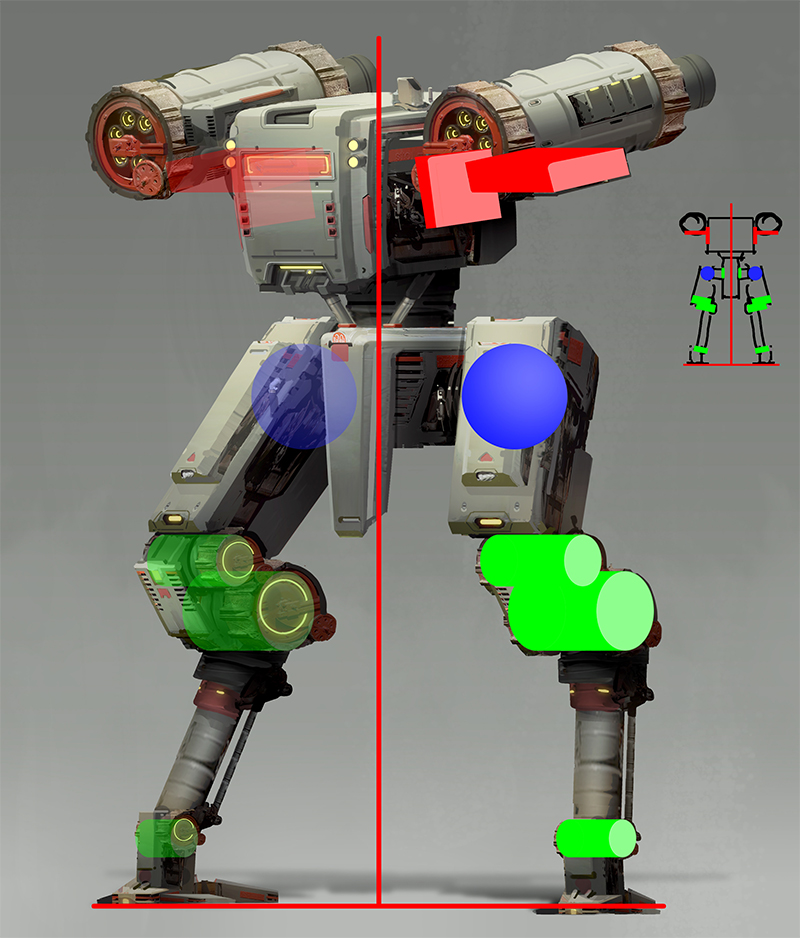
With the canvas set up upwardly, I accept the primitive shapes and begin joining, rotating, squashing, and stretching them like lego pieces to create circuitous shapes. Using the same four parts to create these concepts, I first created several variations on what my mecha's leg could look like. When designing bipedal mecha, it is important to call up about how yous tin balance the joints properly. For example, you can accept a wide-based "pes," or remainder the leg with the "heel" of the pattern, much like a velociraptor.
COLLAGING THE MECHA
Building out from the legs, I collage the rest of the mecha. Using the same method I used to distribute weight and center of residual for the legs, I build out the rest of the form, making sure I don't make the design too asymmetrical or front/back heavy so that information technology couldn't stand without falling over. Going back to velociraptors, you tin probably see why they take a tail; it'southward there to weigh their heads, which lean forward.
At this point, the design starts to read equally a textured volume, even though nosotros haven't put downwardly a single stroke of paint. This is the strength of this process; you lot can quickly visualize the blueprint without having to paint all the details. Keep in mind that elementary silhouettes permit the viewer's eye to better accept in the design.
Bones LIGHTING
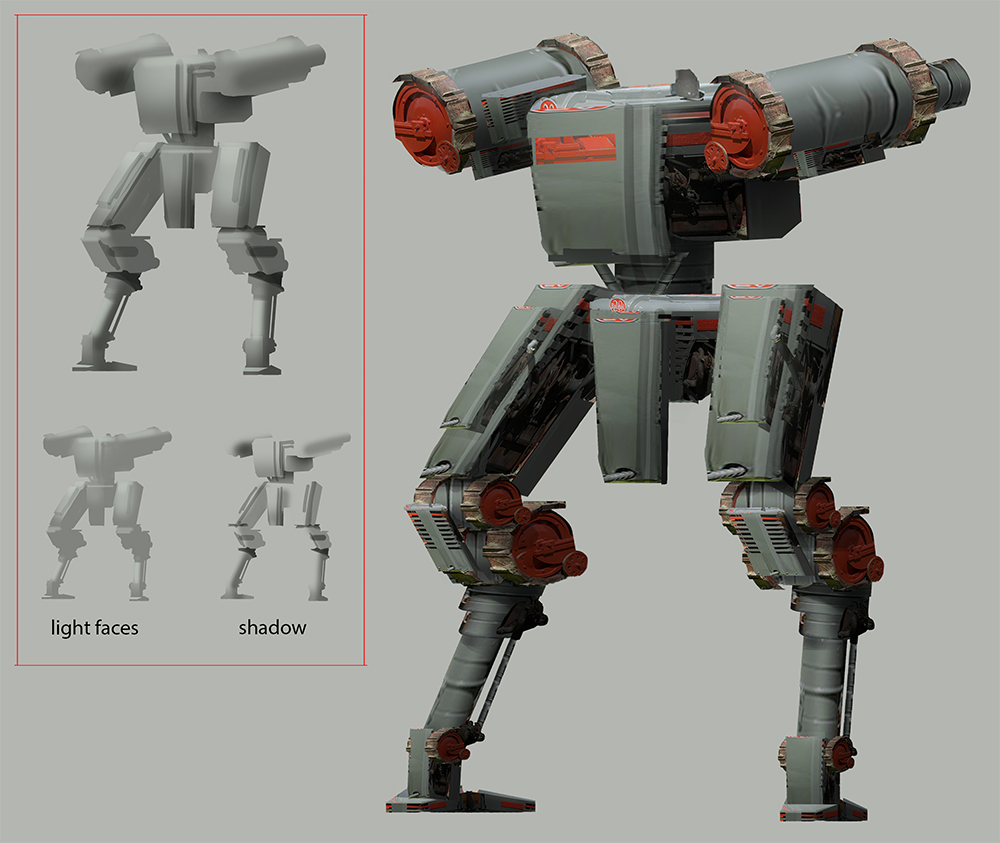
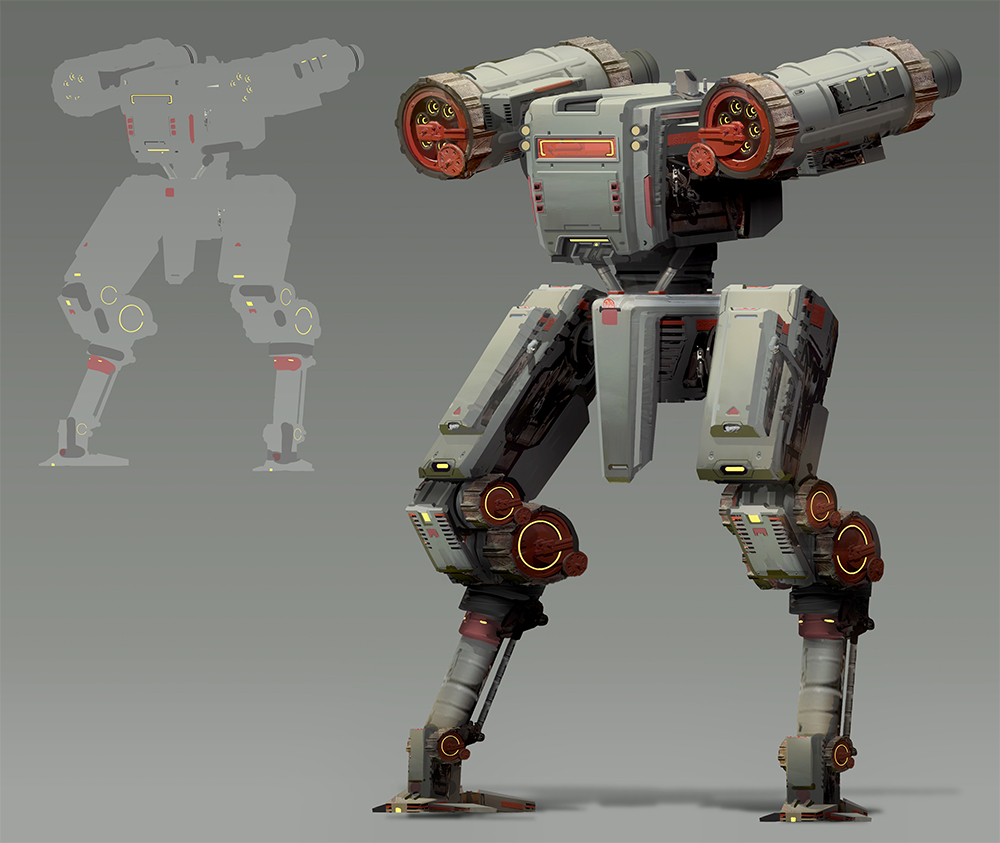
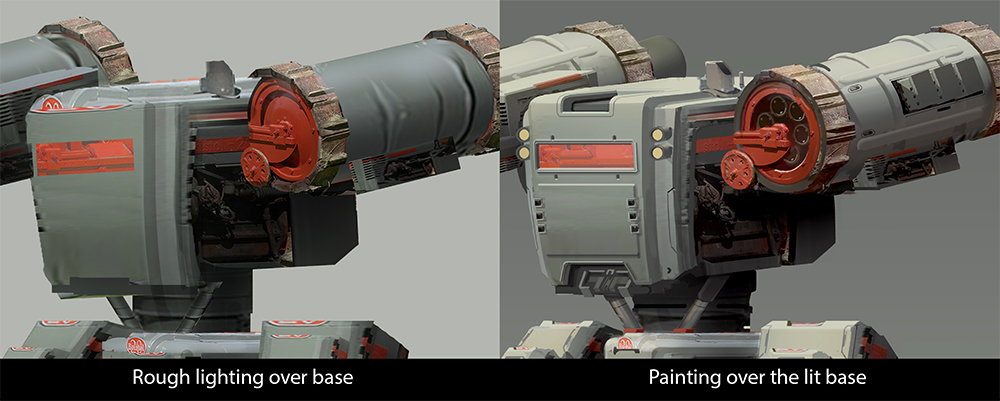
With the base completed, I make a quick lighting pass with a brush to improve mesh the textures together. The goal in this footstep is to remove the "stitched together" look that photograph manipulation produces. I utilise the shadows to right any photograph textures that don't match the final lighting scheme. They also knock back some of the detail and racket that ataxia the blueprint. Additionally, the light layers bring out the volume of the forms, showing how light travels over each primitive shape. The unsaid lighting from the previous phase is now locked in, and shows the mecha better.
PAINTING OVER THE LIT Base
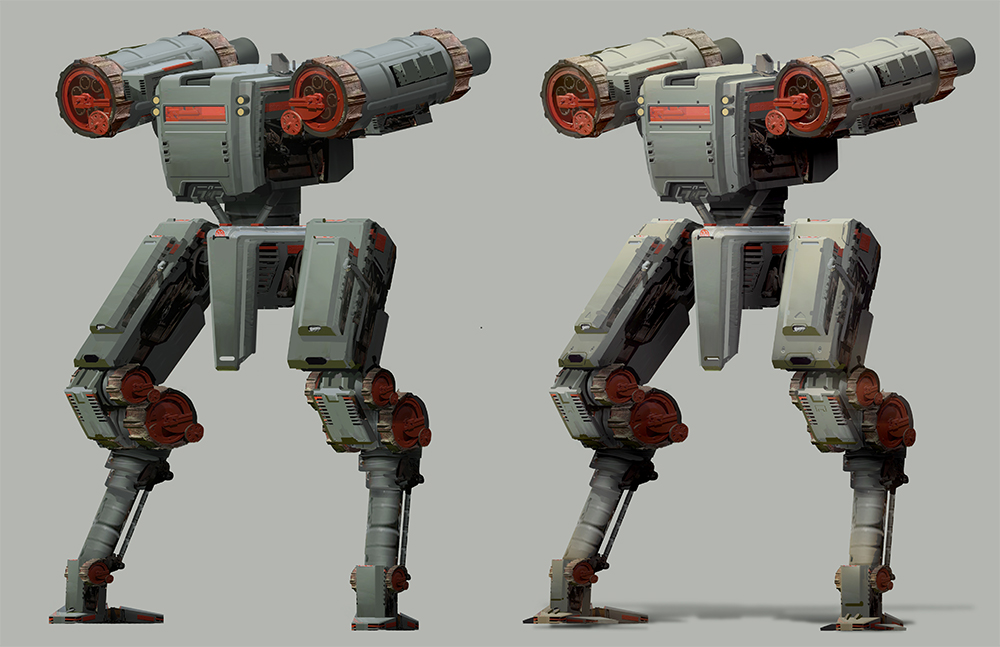
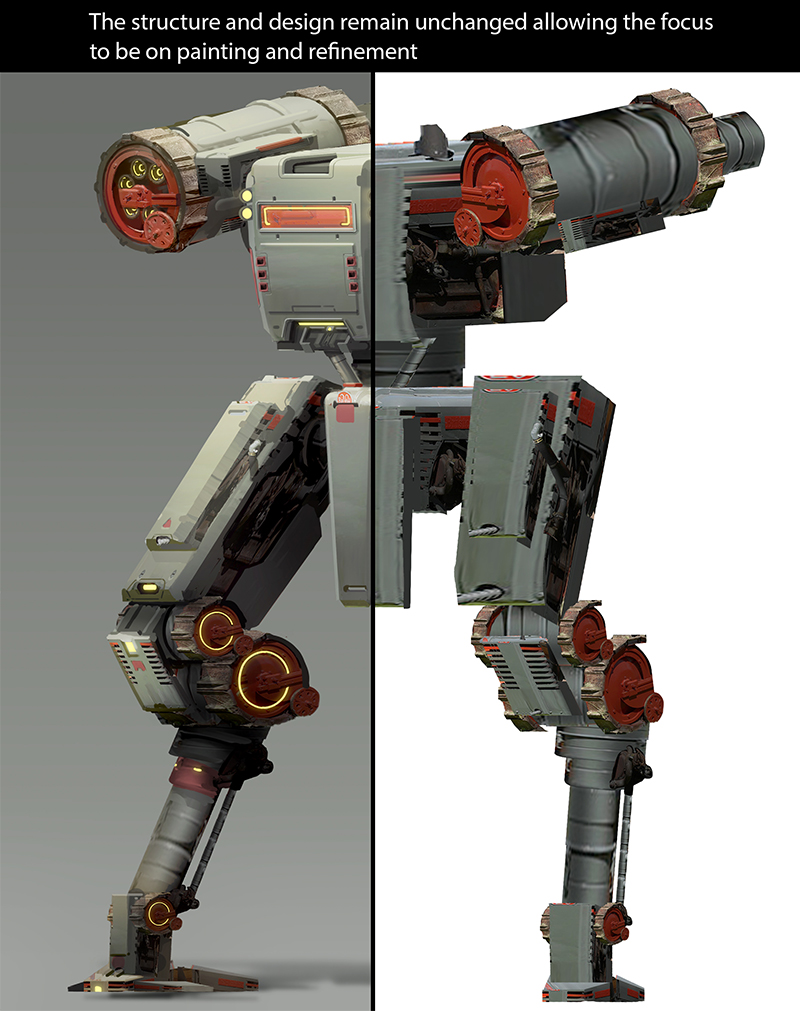
Now the painting can begin! When I pigment, my goal is to refine the shapes and requite them specific characteristics. I think about each edge and if it should be askew (a apartment 45-caste cut) or a radius (a smooth rounded edge) Thanks to the lighting pass I painted earlier, I can at present color pick from my base and build out the subtle form changes. I also kickoff painting in unique details that are not from the original photo textures. During this phase, I start to bring in warm low-cal to better convey the light temperature.
BREAKING DOWN LIGHT AND SHADOW.
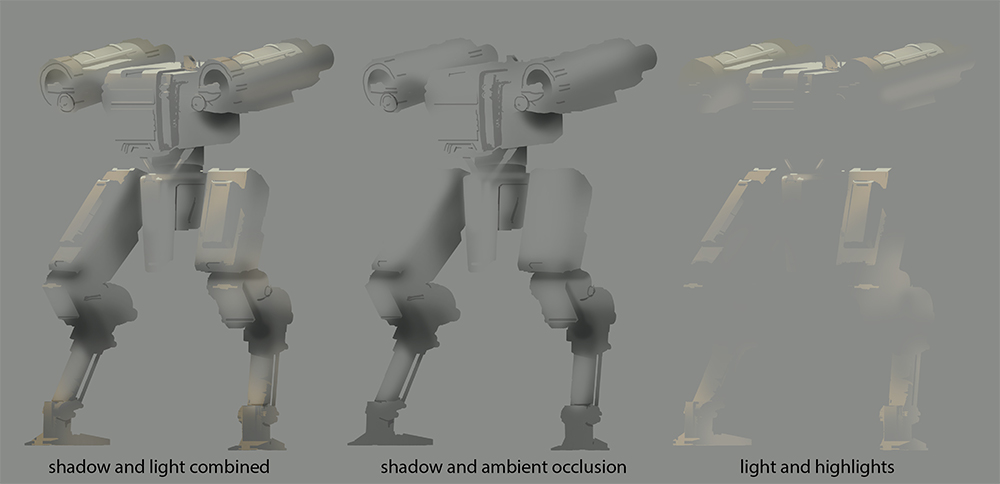
After refining the design, I pigment some other light and shadow laissez passer to unify the new elements. This fourth dimension, I pay more attending to Ambient Occlusion (AO) when working on the shadows. AO tin be described as shadows in the areas of an object that don't receive any light. For light, I paint with a toned color, instead of a neutral white. Every light source is slightly colorized, and in this case, I chose a warm yellow low-cal to make the blueish-green palette I established before in the painting process pop. Fifty-fifty with just the low-cal and shadow combined, you can run across that the blueprint's forms still read correctly. The photo provides the texture and the light, and archaic shapes provide the form.
ADDING LIGHTS
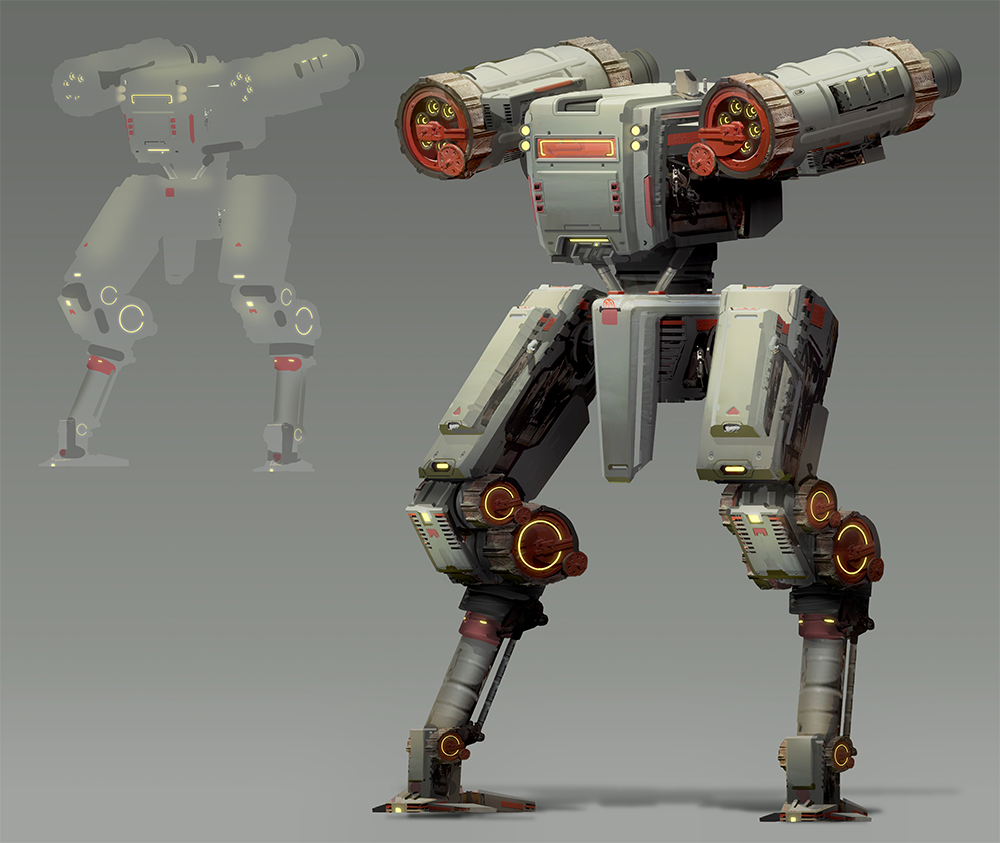
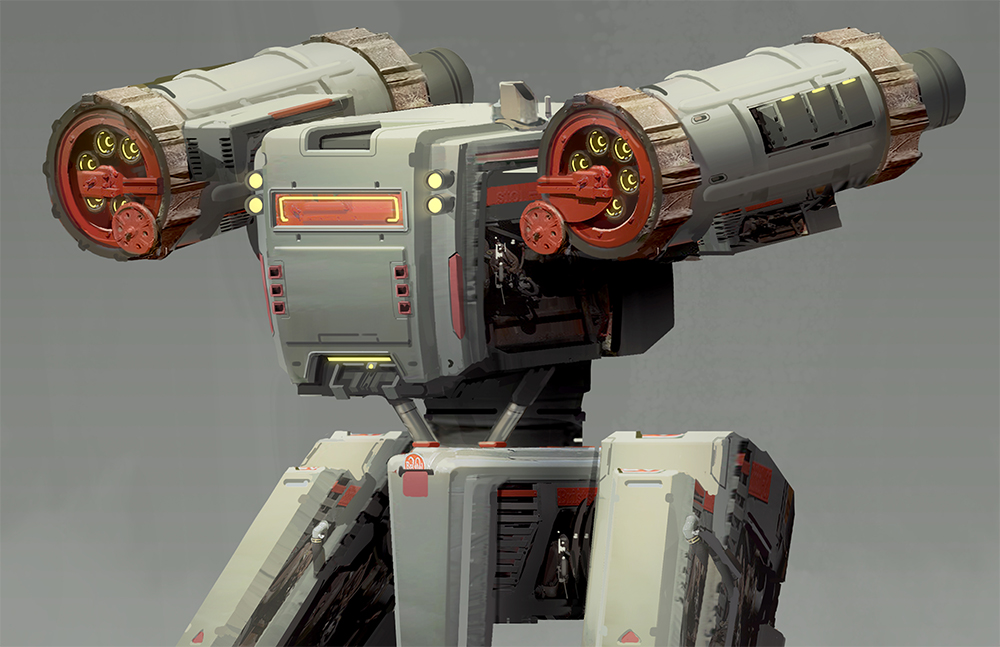
To best display the mecha, I want to show it "activated," so I add together lights to the design to show that information technology is currently on. I place my lights in areas I want to draw attending to. For example, the lights effectually the cockpit area are larger and less subconscious than the lights effectually the rest of the design. The smaller lights effectually joints and detailed areas are there to make motion easier to read.
POLISHING
At this point, my goal is to decide how I tin best polish and "sell" the design. I decide to add together a layer of sheen that adds more brightness, saturation, and vibrancy to the rendering. This makes all the lights added in the previous step glow, causing the design to pop and wait fifty-fifty more "activated."
FINISHING TOUCHES
To finish the paradigm, I shift the weight of the cockpit forward and camber out the leg on the viewer'southward correct to improve weigh the mecha, equally the original stance looked like it was leaning dorsum and didn't correctly sell its weight. I likewise implied an surroundings by adding stage-like lighting striking the basis and some ambient shadows towards the elevation of the canvas. This ambient shadow creates a higher contrast and adds a focal bespeak at the top of the design. Lastly, I dropped a shadow on the basis to unify the mecha and the space information technology's in. To create this shadow, I took the silhouette of the pattern and squished it downward to match the stance of the feet while blurring the edges, which suggests the elevation of the mecha.
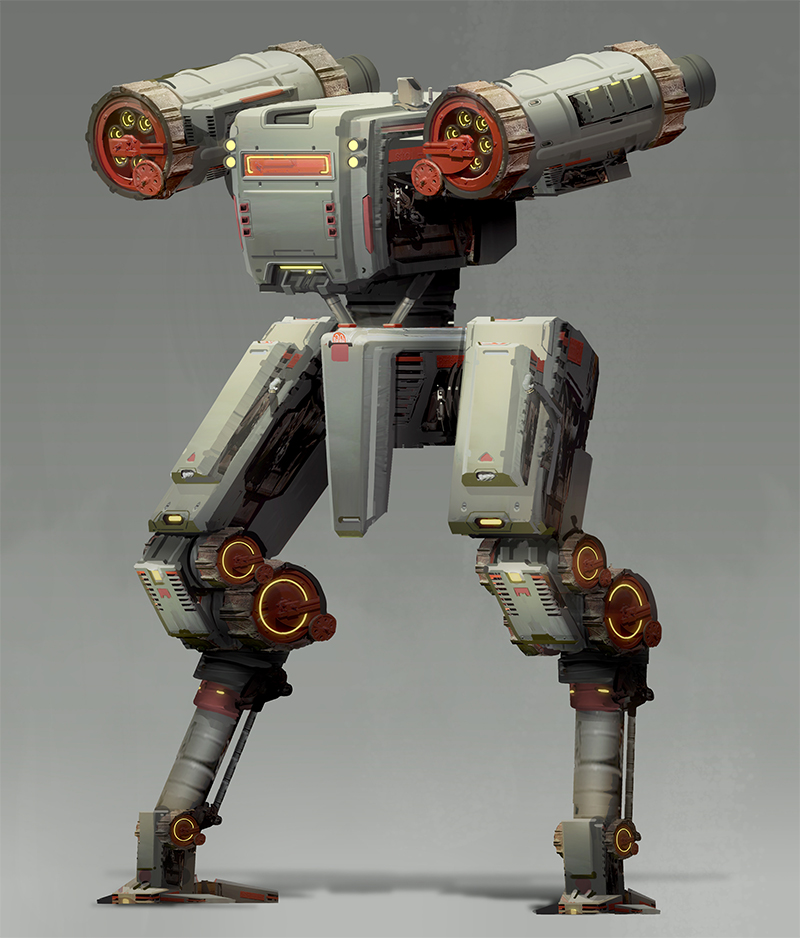
This tutorial took an image of a tractor and worked it into a solid design that could hands be passed to a modeler. This procedure gives me the ability to utilise the pieces I created to brand new designs with entirely different silhouettes(such equally vehicles) while maintaining a consistent shape linguistic communication.

Source: https://www.clipstudio.net/how-to-draw/archives/158119
Posted by: cookdagothead.blogspot.com
0 Response to "How To Draw A Stepwise Mechanism"
Post a Comment